

Article: Round vs Oval vs Cushion: Which Engagement Ring Shape Is Best?

Round vs Oval vs Cushion: Which Engagement Ring Shape Is Best?
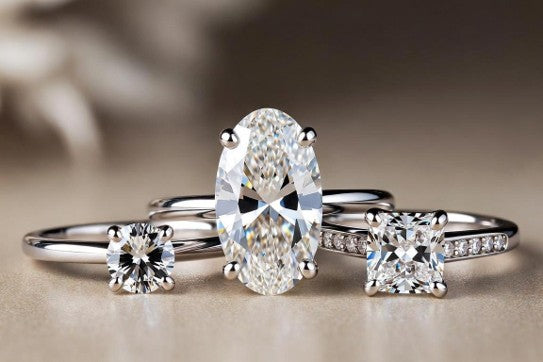
Choosing an engagement ring often starts with one important decision: the diamond shape. Round, oval and cushion-cut engagement rings are three enduring favourites, but each creates a noticeably different look on the hand.
A round engagement ring delivers classic elegance and exceptional brilliance. Oval engagement rings offer an elongated shape that can appear larger for the same carat weight. A cushion diamond combines softly rounded corners with vintage charm and a distinctive style of sparkle.
So, when comparing round vs oval vs cushion, which engagement ring shape is best? There is no universal winner. The perfect choice depends on personal style, preferred sparkle, finger proportions, budget and the overall style you want the finished ring to have.

Round vs Oval vs Cushion at a Glance
A round brilliant is the classic choice for someone who prioritises maximum sparkle and timeless appeal. Its highly refined facet pattern is designed to return light effectively, creating the brightness and fire associated with a traditional diamond engagement ring.
An oval cut offers many of the sparkling characteristics associated with brilliant-cut diamonds but stretches them into a graceful elongated silhouette. This additional length can create greater visual presence and make the finger appear longer.
A cushion cut sits somewhere between classic and distinctive. Traditionally characterised by a square or rectangular shape with curved sides and softly rounded corners, it can produce anything from broad flashes of light to a more intricate crushed-ice effect depending on its faceting.
All three can make beautiful engagement rings . The difference comes down to which characteristics matter most to you.
Round Engagement Rings: Classic Brilliance
The round-cut diamond is arguably the most recognisable engagement ring shape. Its symmetry and brilliant facets create exceptional light performance, making it an obvious choice for anyone who wants sparkle to take centre stage.
A modern round brilliant typically has 57 or 58 facets depending on whether the culet is counted. These facets are precision cut to interact with light, producing a combination of brightness, fire and scintillation.
Round diamonds also have remarkable versatility. A round stone looks equally natural in a traditional solitaire, a hidden halo, a diamond-set band or a more elaborate vintage-inspired design.
For someone unsure which shape their partner would prefer, round is often a safe choice. Its classic style has remained popular across generations and works with virtually every engagement ring setting and wedding band.
Why Are Round Diamonds Usually More Expensive?
Round diamonds generally command higher prices than fancy-shaped diamonds of comparable carat weight and quality.
Part of this comes from demand, but cutting also plays a role. Creating a well-proportioned round brilliant can require removing a significant amount of the original rough diamond. That reduced yield contributes to its price.
This does not mean a round diamond always costs more than every oval or cushion. Diamond prices are also determined by carat weight, cut quality, colour, clarity and individual characteristics.
However, someone working within a fixed budget may find they can achieve a larger-looking centre stone by considering an oval or cushion rather than a comparable round.
Oval Engagement Rings: Elegant and Elongated
Oval diamonds offer an elegant appearance with a more contemporary feel than the traditional round brilliant.
The defining feature is the elongated shape. An oval has a continuous curved outline without sharp corners, giving the stone a soft, graceful appearance that works with both modern and vintage-inspired engagement rings.
That additional length can also influence perceived size. An oval diamond may appear larger face-up than a round diamond of the same carat weight because its surface area is distributed differently.
The elongated proportions can make fingers appear longer and slimmer too, which is one reason oval engagement rings have become such a popular choice.
What Is the Bow Tie Effect in Oval Diamonds?
One characteristic to understand before choosing an oval is the bow tie effect. This describes a darker area that can appear horizontally across the centre of some elongated brilliant-cut diamonds.
A slight bow tie can be a natural characteristic of an oval diamond and does not necessarily make the stone undesirable. However, a very dark or dominant bow tie may distract from the overall brilliance.
Well-cut oval diamonds generally balance this effect more successfully, which is why viewing the individual stone matters more than choosing according to proportions alone.
You may encounter suggested depth ranges of around 58% to 62% for oval diamonds, but there is no single proportion that guarantees exceptional beauty. Light performance, symmetry and the individual appearance of the stone should all be considered together.
Cushion Cut Engagement Rings: Soft and Romantic
Cushion-cut engagement rings are instantly recognisable for their combination of curved sides and rounded corners.
Traditional cushion cuts often have a square shape, although rectangular and elongated cushion-cut diamonds have become increasingly sought after. The softened outline creates a romantic aesthetic that works particularly well with vintage-inspired settings.
Cushion cuts also offer considerable variation in their internal appearance. Some produce broad flashes of light with clearly defined facets, while others create a crushed-ice look made up of smaller, more intricate reflections.
This variety gives cushion engagement rings a distinctive personality. Two cushion-cut diamonds with the same carat weight and similar dimensions can still look remarkably different.
What Is an Elongated Cushion Cut?
An elongated cushion combines the rounded corners of a traditional cushion with proportions closer to an oval or rectangular shape.
Instead of appearing approximately square, an elongated cushion cut stretches across the finger to create additional visual presence. Length-to-width ratios around 1.15 to 1.30 are commonly associated with elongated cushions, although there is no single perfect ratio.
Lower ratios create a shape closer to a traditional cushion, while higher ratios produce a noticeably longer stone.
Elongated cushion-cut diamonds have become particularly popular for people who like the finger-lengthening qualities of an oval but prefer the structure and vintage charm of a cushion.
Which Shape Looks Biggest for the Same Carat Weight?
If perceived size is a priority, oval diamonds frequently have an advantage.
Carat measures weight rather than visible dimensions, so two shapes at the same carat weight do not necessarily occupy the same amount of space when viewed from above.
Oval diamonds spread their weight across an elongated surface, which can make them appear larger than comparable round diamonds. Their length also creates additional visual impact across the finger.
Cushion-cut diamonds can sometimes appear slightly smaller face-up at the same carat weight because certain cushions carry more weight through their depth. However, this varies significantly according to the proportions and faceting of the individual stone.
An elongated cushion can provide greater apparent size than a more traditional square cushion while retaining the softly rounded corners that define the style.
Which Shape Has the Most Sparkle?
For consistent brilliance, round brilliant diamonds remain the benchmark.
Their facet arrangement and proportions have been extensively refined to maximise light return. A beautifully cut round diamond can therefore produce extraordinary brightness, fire and sparkle.
Oval diamonds also use brilliant-style faceting and can deliver impressive sparkle. Their light performance can vary more between individual stones, particularly because of the bow-tie effect.
Cushions are more varied again. One cushion may create broad flashes and strong fire, while another has the fragmented sparkle associated with a crushed-ice pattern.
Rather than assuming every stone within one shape will perform identically, compare individual diamonds under different lighting conditions.
Which Is Best for a Solitaire Setting?
Round, oval and cushion diamonds all work beautifully in solitaire settings, but they create different effects.
An oval solitaire feels slightly more contemporary and makes the elongated proportions particularly noticeable. A delicate band can further emphasise its visual size.
A cushion solitaire has a softer character. Its curved corners provide enough detail to make the ring distinctive even without additional diamonds.
A hidden halo can be incorporated beneath any of these shapes to add subtle sparkle while keeping the main diamond visually dominant from above.
Which Shape Works Best With a Wedding Band?
All three shapes can sit beautifully with a wedding band, although the engagement ring setting is just as important as the centre stone.
A round engagement ring is exceptionally versatile and works with everything from plain metal bands to diamond-set wedding rings.
Oval engagement rings can create an elegant contrast with a straight band, while contoured wedding bands can follow the shape of lower or more elaborate settings.
Cushion engagement rings pair particularly well with bands that echo their softer proportions. Vintage-inspired wedding rings can enhance their romantic character, while a simple band creates a cleaner, more contemporary combination.
When choosing the two rings separately, consider how high the engagement ring sits and whether there is enough space for the wedding band to sit comfortably alongside it.
Which Shape Suits Your Personal Style?
Think beyond which diamond is currently popular and consider the jewellery you naturally enjoy wearing.
Choose a round cut if you are drawn to classic elegance, symmetry and timeless design. It is particularly well suited to someone who wants exceptional brilliance without choosing a shape strongly associated with one particular trend.
Choose an oval if you prefer an elongated, elegant silhouette with plenty of sparkle. Its balance between classic and contemporary makes it highly versatile.
Choose a cushion cut if you appreciate softer proportions, vintage charm and a stone with more individual character. A square cushion feels romantic and traditional, while an elongated cushion introduces modern proportions.
There is no wrong answer. Different shapes simply express different styles.
Does Finger Shape Matter?
Hand and finger proportions can help guide your decision, although they should never override personal preference.
Elongated shapes such as oval, pear, marquise and elongated cushion diamonds can create a lengthening effect on the finger. This can make them particularly appealing to someone who wants the hand to appear more elongated.
Round diamonds provide visual balance and work beautifully across a wide variety of finger shapes and ring sizes.
Cushions have more variation. A square cushion can create a stronger horizontal presence, while an elongated cushion produces a lengthening effect closer to an oval.
The best way to decide is to try different shapes in person. A diamond that looks perfect in an image may create a completely different impression once it is on your hand.
Round vs Oval vs Cushion: Which Offers the Best Value?
Value depends on more than diamond shape, but fancy-shaped diamonds such as oval and cushion can sometimes offer a lower price per carat than comparable round brilliant diamonds.
Cushion-cut diamonds in particular can provide attractive value, while their variety of faceting and proportions gives buyers considerable choice.
Oval diamonds can also cost less per carat than rounds while offering a larger face-up appearance, although particularly desirable oval diamonds with excellent proportions can command strong prices.
Elongated cushions may provide another appealing option for someone seeking substantial visual impact without moving towards the pricing of an equivalent round diamond.
Rather than focusing exclusively on carat, compare the actual dimensions, cut quality, colour, clarity and overall appearance of each stone.
Round vs Oval vs Cushion: Which Is the Perfect Choice?
If maximum sparkle and timeless appeal are your priorities, a round brilliant is difficult to beat.
If you want an elegant appearance, impressive perceived size and an elongated shape that flatters the finger, consider an oval cut.
If you prefer softly rounded corners, vintage charm and more variation in faceting, a cushion diamond may be your perfect choice. An elongated cushion offers an additional option for those caught between cushion vs oval.
Ultimately, choosing an engagement ring shape is personal. Technical characteristics can help narrow down the options, but the best diamond is the one you continue to love when trends change.
Find Your Perfect Engagement Ring at Lords
Round, oval and cushion engagement rings each offer their own combination of brilliance, proportions and character. Understanding the key differences can help you move beyond simply choosing a popular shape and find a ring that genuinely reflects your style.
Lords offers engagement rings across a range of diamond shapes, settings and precious metals, alongside a bespoke service for creating something more personal.
Whether your perfect ring is a timeless round solitaire, an elegant oval or a romantic cushion cut, Lords can help you explore different stones and settings to create an engagement ring designed around your preferences.