


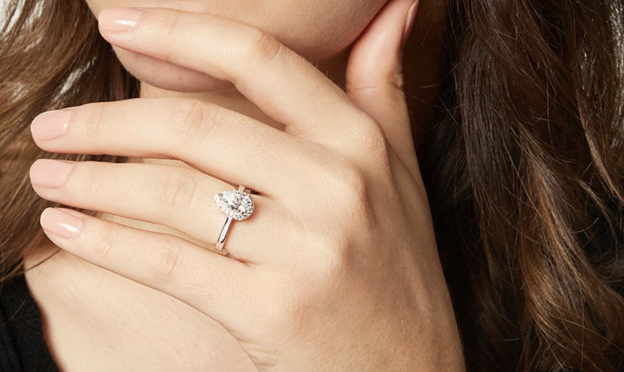
2 Carat Diamond Ring Cut: What to Look for Before You Buy
A 2-carat diamond ring has an undeniable presence. At this size, however, choosing a beautiful diamond is about far more than the diamond's weight. Cut quality, proportions, diamond colour and clarity can dramatically change how bright, large and impressive a 2-carat diamond appears.
This aspect is where understanding the 4Cs becomes valuable. Cut, colour, clarity and carat provide a framework for assessing diamond quality, but they do not contribute equally to what you see. With a substantial centre stone, particularly one intended for an engagement ring, the cut deserves close attention because it determines how effectively light travels through and returns from the diamond.
Here is what you should know about a 2-carat diamond ring's cut, clarity and shape before choosing your stone.

What Does 2 Carats Actually Mean?
Carat is a measure of weight rather than physical dimensions. One carat equals 0.2 grams, meaning a 2-carat diamond weighs approximately 0.4 grams.
That does not mean every 2-carat diamond will look the same size.
Two diamonds with exactly the same carat weight can have noticeably different face-up dimensions. A poorly proportioned stone may carry more of its weight beneath the surface, while a well-proportioned diamond can distribute its weight more effectively and create greater visual presence.
Diamond shape also matters. An oval, pear or marquise diamond can create an elongated appearance that looks larger across the finger than another stone of the same weight.
When exploring engagement rings , it is therefore worth considering dimensions and proportions alongside the carat figure itself.
Why is the cut so important for a 2-carat diamond?
Diamond cut affects how light interacts with the stone. When a diamond has carefully considered proportions, symmetry and polish, light can enter the stone and return towards the eye as brightness, fire and sparkle.
A poorly cut diamond does not reflect light as effectively. Even with excellent colour and clarity, it may appear comparatively dull, dark or smaller than its carat weight suggests.
This is why cut is often considered the most important of the 4Cs for visual beauty. The GIA diamond cut grading system assesses round brilliant diamonds from Excellent through Very Good, Good, Fair and Poor, considering factors including brightness, fire, scintillation, proportions, symmetry and polish.
For a 2-carat diamond ring, where the centre stone naturally attracts attention, strong light performance is particularly important.
Diamond Cut and Diamond Shape Are Different
Diamond cut and diamond shape are sometimes used interchangeably, but they describe different characteristics.
'Shape' refers to the outline of the stone as viewed from above. Round, oval, pear and marquise are all examples of diamond shapes.
'Cut' describes how successfully the facets and proportions of a diamond interact with light. A diamond can therefore have an elegant oval shape but still have weaker proportions or light performance.
Brilliant-style shapes generally contain facet arrangements designed to maximise sparkle. Step-cut diamonds, such as emerald cuts, create a different visual effect with larger, more open facets and flashes of white light.
Neither is inherently better. The choice depends on whether you prefer intense brilliance or a cleaner, more architectural appearance.
Which Diamond Shape Works Best at 2 Carats?
At 2 carats, different shapes create noticeably different personalities.
A round brilliant offers classic proportions and exceptional potential for brilliance. It is also one of the most sought-after shapes, which can contribute to a higher price per carat.
Oval diamonds combine brilliant-style sparkle with an elongated silhouette. Their shape can create a flattering lengthening effect across the finger and give a 2-carat stone considerable visual presence.
Pear-shaped diamonds combine rounded and pointed elements for a distinctive, elegant appearance, while marquise diamonds offer an even more elongated profile. Both can appear impressively large face-up when their proportions are well chosen.
Your ideal diamond shape ultimately comes down to personal style. The important point is to compare actual proportions rather than assuming that equal carat weights will produce equal visual size.
Understanding the GIA Diamond Clarity Scale
Diamond clarity describes the presence of internal and external characteristics. Internal characteristics are called inclusions, while characteristics affecting the surface are called blemishes.
The GIA diamond clarity scale assesses diamonds under 10x magnification and contains six categories divided into 11 specific diamond clarity grades. These range from Flawless (FL) through Internally Flawless (IF), Very Very Slightly Included (VVS1 and VVS2), Very Slightly Included (VS1 and VS2), Slightly Included (SI1 and SI2), and Included (I1, I2 and I3).
A flawless diamond has no inclusions or blemishes visible to a skilled grader under 10x magnification. It represents the highest clarity grade, but that does not automatically make FL the best-value choice for an engagement ring.
The GIA diamond clarity guideexplains how the number, size, position, nature and relief of clarity characteristics contribute to the final clarity grade.
What Is Clarity Best For for a 2-Carat Diamond?
There is no single clarity grade that every 2-carat diamond needs. The goal for many buyers is to find a stone that looks clean to the naked eye without paying unnecessarily for microscopic differences they cannot see.
This becomes particularly important with larger diamonds. A 2-carat stone has a greater visible surface area than a smaller diamond, potentially making some inclusions easier to notice.
Shape can influence this too. Brilliant-style cuts often make certain minor inclusions less noticeable because their facet patterns produce considerable sparkle. Step cuts have larger, more open facets, which can make inclusions easier to see.
Rather than selecting clarity from the certificate alone, examine the individual diamond and consider where its inclusions are located. A discreet inclusion near the edge of a stone can have a very different visual effect from one positioned prominently beneath the centre.
How Diamond Colour Affects a 2-Carat Stone
Diamond colour is another consideration that can become more noticeable as stone size increases.
The GIA colour scale runs from D, representing colourless, through to Z, where a light yellow or brown tint becomes increasingly noticeable. These subtle colour variations are assessed under controlled conditions rather than by simply viewing a stone on a computer monitor.
Colour should not be confused with naturally fancy-coloured diamonds, where hues such as yellow, pink, blue, green, orange and even violet can be intentionally desirable. In those diamonds, the hue and intensity of colour become part of the stone's character and value.
For traditional white diamonds, the setting can also influence how colour is perceived. White gold and platinum create a bright, cool backdrop, while yellow gold can allow buyers greater flexibility with colour because the surrounding metal already contributes warmth.
Cut Can Influence How Colour and Clarity Appear
One reason diamond cut deserves so much attention is that it influences more than sparkle.
Strong light performance can help make subtle characteristics less obvious to the naked eye. A bright, lively diamond can draw attention towards its brilliance and fire, whereas a stone with weak light return may make colour or internal characteristics more apparent.
This does not mean cut can change the actual colour or clarity grade. Instead, it changes the overall visual impression.
When comparing two 2-carat diamonds, the one with the technically higher colour or clarity grade is not necessarily the one you will find most beautiful. The combination of all four Cs matters.
Does a 2-carat diamond always cost twice as much as a 1-carat?
No. Diamond prices do not increase in a simple straight line according to weight.
Larger diamonds are rarer, and prices per carat can increase at significant weight thresholds. A 2-carat diamond may therefore cost considerably more than twice the price of a comparable 1-carat stone.
Cut, colour, clarity, shape and whether the stone is natural or lab-grown can create further variations. Two diamonds with the same 2-carat weight can have dramatically different prices because their quality characteristics are different.
Round brilliant diamonds can also command a premium compared with certain fancy shapes due to a combination of demand and the amount of rough diamond typically lost during cutting.
This is why comparing diamonds purely according to carat weight rarely provides the complete picture.
Should you choose a natural or lab-grown diamond for a 2-carat engagement ring?
Both natural and lab-grown diamonds can provide the brilliance, hardness and appearance expected from a diamond engagement ring. Lab-grown diamonds are diamonds rather than simulants, sharing essentially the same chemical and physical properties as natural stones.
The distinction lies primarily in their origin, rarity and market pricing.
For some couples, choosing lab-grown can make a 2-carat centre stone accessible within a different budget. Others specifically value the geological origin and rarity of a natural diamond.
The right choice is personal. What matters is understanding what you are purchasing and selecting a stone whose cut, colour, clarity and proportions deliver the appearance you want.
Choosing the Setting for a 2-Carat Diamond
A 2-carat centre stone has considerable presence, so the setting should enhance it rather than overpower it.
A solitaire places the diamond firmly at the centre of the design and allows its shape and brilliance to take focus. A halo can increase the overall visual impact by surrounding the main stone with smaller diamonds, while a trilogy setting creates additional width and symbolism.
Metal also changes the finished appearance. Platinum and white gold provide a cool, bright contrast around a white diamond, while yellow gold creates warmth and can produce an elegant contrast between the band and centre stone.
The proportions of the band matter too. A particularly delicate band can make a large diamond appear even more prominent, while a broader design creates greater visual balance.
How to Choose a 2-Carat Diamond Ring
Begin by deciding which diamond shape suits the wearer's style. From there, prioritise a well-cut stone with strong proportions and appealing light performance.
Next, consider clarity from a visual rather than purely numerical perspective. Look for a diamond that appears clean to the naked eye and assess whether any inclusions affect its beauty.
Choose a colour grade that works with your preferred metal and personal expectations, then compare dimensions to understand how the diamond's weight translates into face-up size.
Most importantly, view the diamond as a complete stone rather than a collection of grades. A certificate is an invaluable quality reference, but an engagement ring is ultimately chosen to be seen and worn.
Find Your Perfect 2-Carat Diamond Ring at Lords
A 2-carat diamond creates an impressive presence, but carat weight alone does not determine beauty. Cut controls how effectively the stone interacts with light, while clarity, colour, shape and proportions complete its character.
The best 2-carat diamond ring is therefore not necessarily the stone with the highest grade in every category. It is the diamond where quality, visual performance, personal style and budget come together successfully.
Explore the diamond engagement rings at Lords or speak with the Lords team for expert guidance when comparing diamond shapes, settings, precious metals and stone characteristics for your perfect ring.